
LinkedIn Posts
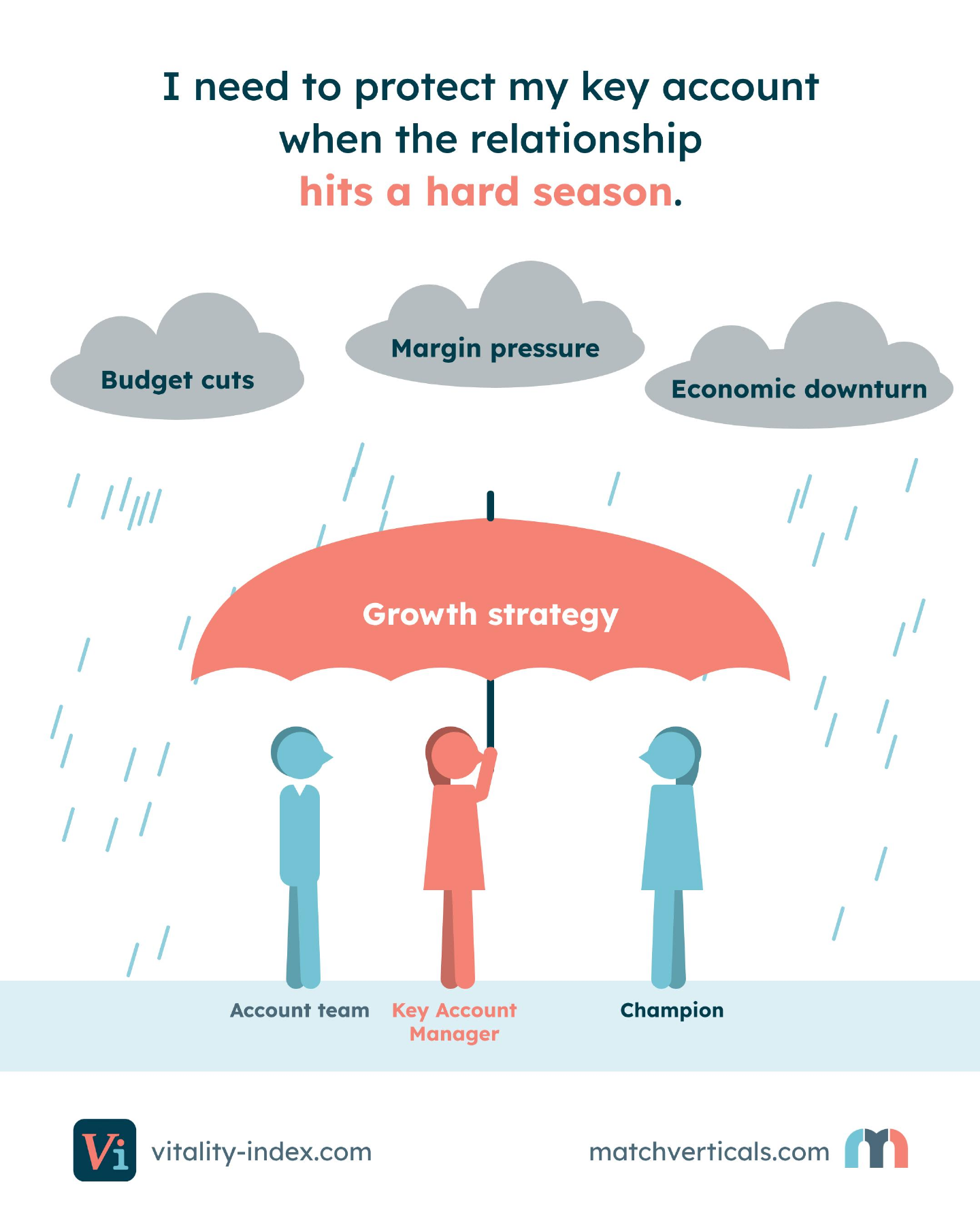
I need to protect my key account when the relationship hits a hard season.

Most key accounts go through hard seasons: a budget cut, margin pressure, an economic downturn that lasts years.
I need to protect my key account when the relationship hits a hard season.
Most key accounts go through hard seasons: a budget cut, margin pressure, an economic downturn that lasts years. How your team responds in those moments shows the client how strong the partnership really is.
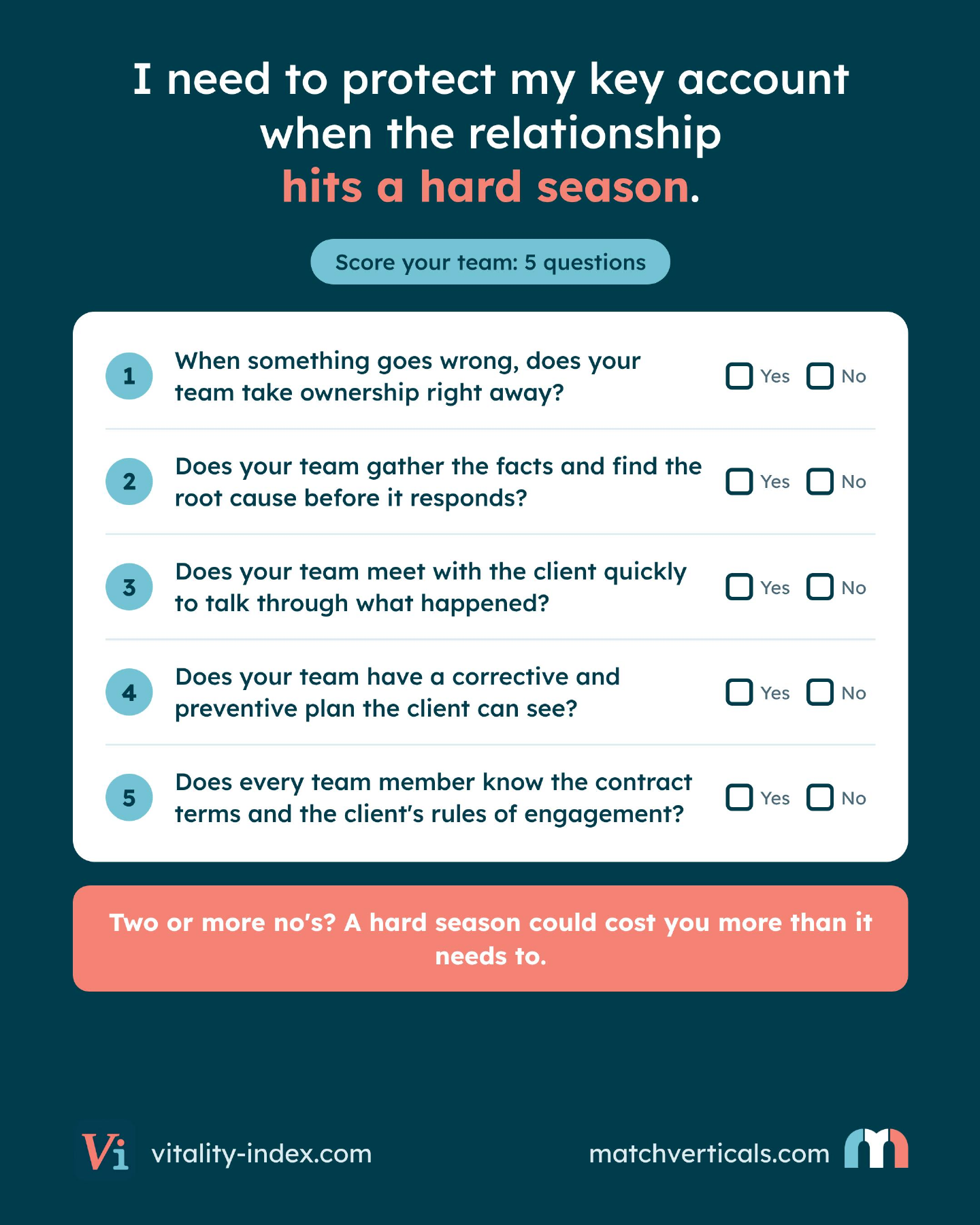
Five questions to see if your team can do this job today:
- When something goes wrong, does your team take ownership right away?
- Does your team gather the facts and find the root cause before it responds?
- Does your team meet with the client quickly to talk through what happened?
- Does your team have a corrective and preventive plan the client can see?
- Does every team member know the contract terms and the client's rules of engagement?
Two or more no's, and a hard season could cost you more than it needs to.
Several years ago, I was getting ready to leave on a business trip when I received an email marked urgent from the Head of Contracts at one of our large life science clients: "Dear Taylor, I'm writing to notify your organization that we are suspending your services indefinitely while we conduct a full audit…"
We were out of compliance with a $5M contract. Out of a 30-page agreement, one of our team associates broke the client's rules of engagement. She was actually doing something we taught her to do in our sales training. It came down to a trust issue for the customer.
After consulting with my boss, we immediately went into action, ran our own investigation to gather the facts, set calls with the buyer, and developed a CAPA plan (Corrective and Preventive Action) to identify the root cause, fix what went wrong, and put controls in place so it doesn't happen again. We took ownership of the breach of trust.
After three months, we were back in action with this customer, but not before losing 30% of our revenues with them. The lesson was learned, and we maintained a good record with them for the next 15 years.
Hard seasons test the foundation of a partnership. Owning the problem quickly keeps the relationship standing while you rebuild.
Our system, the Vitality Index, gives your key account teams a growth strategy and the plan to run it across 21 growth drivers, including contract compliance, internal account investments and business reviews. It shows where they stand today, the work it takes to level up, and how to do it, until they reach a vital partnership that lasts.
When your key account hits its next hard season, what will your team do in the first 24 hours?
We built a free, 4-minute Key Account Risk Assessment. It gives you a risk score for your key accounts across team alignment, account planning, account transitions, and visibility. Link in the comments.
More in LinkedIn Posts
LinkedIn Posts
Would my champion in our key account be proud to forward our results to their boss?
A champion forwards what makes them look good to their boss and poses no risk of hurting their brand.
LinkedIn Posts
I need my partners and sub-vendors running the same strategy for my key account that we are.
Partners and sub-vendors shape how the client experiences your team.
LinkedIn Posts
I need my team to act on warning signs at my key account before they turn into losses.
Warning signs often show up early: a number that slips, a meeting that gets pushed, a champion who goes quiet.
LinkedIn Posts
I need proof of what we deliver for my key account, captured while we deliver it.
When the client asks what you've done for them, the answer needs numbers in their language.
LinkedIn Posts
I need sales and delivery to turn their disagreements into progress on my key account.
Sales and delivery often disagree on how to approach the work in key accounts that are growing.
LinkedIn Posts
I need someone on my team who could run my key account tomorrow.
In key account management, it's critical to have a succession plan.
Related across the blog
Strategy & Planning
CRM vs. Account Planning Tools vs. a Key Account Growth System: What Each One Does
A CRM keeps the records. Account planning tools structure the plan your team fills in. A key account growth system generates the strategy itself. Here is the difference, side by side.
Key Account Systems
The structure behind growing key accounts in B2B needs changing
Growing key accounts takes more than records and tools. Explore the strategic layer account teams need and the nine standards behind the Vitality Index.
Key Account Growth
You just won a massive key account. Now what?
Winning a massive key account is only the start. The real work is building a partnership that can withstand renewals, competitive threats, and growth across the business.
Lead with better systems.
The same frameworks that power this post power Vitality Index - the platform strategic account teams use to measure, plan, and grow their most vital partnerships.